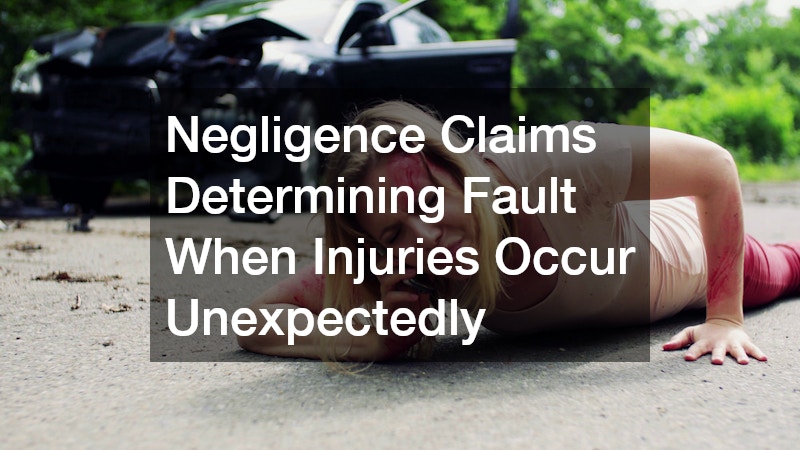
Negligence Claims Determining Fault When Injuries Occur Unexpectedly
A sudden injury on your property, in a parking lot, or after a fender bender can leave you overwhelmed and unsure of what happens next. One of the first questions that comes up is simple but important: who is actually at fault, and what does that mean for you financially and legally? Understanding how negligence works, and how fault gets assigned when an injury seems to come out of nowhere, can help you protect yourself, your finances, and your peace of mind. This guide breaks down the process in plain language so you can make informed decisions if you ever find yourself in this situation.
Understanding Negligence in Personal Injury Cases
Negligence is the legal foundation behind most injury claims, and it simply means someone failed to act with reasonable care, causing harm to another person. Courts generally look at four elements: duty of care, breach of that duty, causation, and actual damages suffered by the injured party. This framework is central to personal injury law and applies whether the injury happened on a sidewalk, in a store, or during a car accident.
Each element serves a specific purpose in building or defending a claim. Duty of care asks whether the at-fault party had a legal obligation to act safely toward you, such as a store owner keeping floors free of hazards or a driver obeying traffic laws. Breach examines whether that duty was violated, while causation requires showing the breach directly led to your injury rather than some unrelated factor. Damages, finally, must be concrete, whether that’s medical bills, lost wages, or documented pain and suffering, not just a hypothetical harm.
Consider a few real-world scenarios to see how these elements interact. A grocery store that fails to clean up a spill within a reasonable time may be breaching its duty of care if a customer slips soon after; a distracted driver who runs a red light and causes a collision has clearly breached the duty owed to other motorists. In both cases, the injured party still needs medical records, repair estimates, or wage statements to prove damages actually occurred.
Understanding these basics helps you recognize whether your situation might qualify for a claim before you even speak with anyone else about it.
- Duty of care means a person or business had a responsibility to keep others reasonably safe, such as a store owner maintaining clear walkways or a driver following traffic laws.
- Breach occurs when that responsibility is ignored or handled carelessly, like failing to clean up a spill or texting while driving.
- Causation links the careless act directly to the injury, requiring proof that the harm wouldn’t have happened “but for” the breach.
- Courts often look at foreseeability too — could a reasonable person have predicted that the careless act might cause this type of harm?
- Damages refer to the actual harm suffered, including medical bills, lost wages, property damage, and pain and suffering.
- Damages can be economic (quantifiable costs like hospital bills) or non-economic (harder-to-measure losses like emotional distress).
Common Scenarios Where Injuries Occur Without Warning
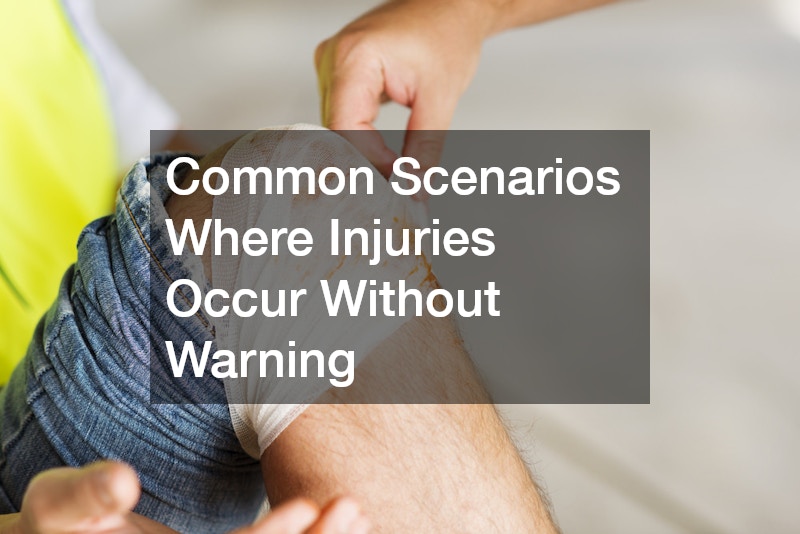
Unexpected injuries happen more often than people realize, and they rarely come with clear warning signs beforehand. A wet floor in a grocery store, a loose stair railing, an uneven sidewalk, or a dog that suddenly lunges can all lead to serious harm in seconds. These premises-related incidents often occur in places people assume are safe, like workplaces, retail stores, apartment complexes, and public parks, which makes the injury feel even more jarring when it happens.
Vehicle-related incidents are another major category, since even a low-speed collision can cause whiplash, soft tissue damage, or concussions that surface hours or days later. Rear-end collisions, sideswipes in parking lots, and sudden stops in traffic are common examples where the driver at fault isn’t always obvious right away. Some injuries don’t fully present symptoms until a person tries to return to normal activity, which can complicate both medical treatment and any related claims.
Other everyday scenarios include falling merchandise in retail stores, malfunctioning equipment at a gym, or defective products that fail without any prior indication of a problem. In many of these cases, the injured person is left dealing with medical bills while also trying to sort out auto insurance details if a vehicle was involved, or coordinating with a property owner’s liability coverage if the injury happened on someone else’s premises. Regardless of the setting, the sudden and unpredictable nature of these events is exactly what makes fault determination so challenging.
- Slip and fall accidents in retail stores or private homes, often caused by wet floors, uneven flooring, or poor lighting
- Falling objects in warehouses or construction zones, including improperly stacked inventory or unsecured tools and equipment
- Dog bites or animal-related injuries on someone else’s property, particularly when owners fail to restrain animals with known aggressive tendencies
- Rear-end or side-impact vehicle collisions, frequently linked to distracted driving or failure to yield right-of-way
- Injuries from poorly maintained rental properties, such as broken stairs, faulty wiring, or ignored mold issues
- Trip hazards in parking lots or sidewalks, like cracked pavement or unmarked curbs
- Amusement park or gym equipment malfunctions resulting from inadequate inspection or maintenance schedules
How Fault Gets Determined When Causes Aren’t Obvious
When an injury seems to happen out of nowhere, determining fault often requires piecing together small details that aren’t immediately obvious to the person involved. Investigators look at maintenance records, witness statements, weather conditions, and even security footage to reconstruct what actually happened. This process can feel overwhelming for someone who is also recovering physically, which is why many people choose to consult personal injury attorneys early on. Having someone experienced review the details can prevent important evidence from being lost or overlooked before it disappears.
Fault isn’t always assigned to a single party either, since some states use comparative negligence rules that split responsibility between multiple people involved. This means your compensation could be reduced if you’re found partially responsible for the incident. Understanding how these rules apply in your state is a key part of knowing what to expect from any potential claim.
The Role of Evidence in Building a Strong Claim
Evidence is the backbone of any negligence case, and the strength of your claim often depends on how much documentation you gathered right after the injury occurred. Photos of the scene, medical records, and contact information for witnesses can make a significant difference later on. Video footage from nearby security cameras, weather reports, and maintenance logs can also corroborate your version of events when memories start to fade.
Many people don’t realize how quickly conditions change, so capturing details immediately is critical rather than waiting until you feel better. A wet floor gets mopped up, a broken step gets repaired, and skid marks fade within days—once that physical evidence disappears, so does a piece of your case. Even small details, like the time stamp on a photo or the badge number of a responding officer, can later prove pivotal in establishing timelines and accountability.
This is one reason personal injury legal services often emphasize early evidence collection as a top priority for new clients. Attorneys frequently send preservation letters to businesses or insurers within days of an incident, formally requiring them to retain surveillance footage or incident reports before routine deletion policies kick in. Waiting even a few weeks to consult a professional can mean the permanent loss of evidence that might have made or broken your claim.
- Photograph the scene from multiple angles before anything is cleaned up or repaired, including close-ups of hazards like wet floors, broken steps, or exposed wiring
- Capture wide shots showing lighting, signage, and surrounding context that establish how the hazard existed within its environment
- Get names and phone numbers of anyone who witnessed the incident, and ask them to jot down what they saw while it’s fresh
- Keep copies of all medical records, bills, and treatment plans, including ER visit summaries, imaging results, and physical therapy notes
- Track missed workdays and out-of-pocket expenses, since these often factor into calculating damages later
- Save any correspondence with property owners, managers, or drivers involved, including texts, emails, and incident reports filed on-site
- Note the date, time, and weather conditions surrounding the incident, along with any temperature or lighting details that might explain visibility issues
- Request maintenance logs or prior complaint records if available, as these can show whether a hazard was known and ignored
What Happens When a Vehicle Accident Causes Injury
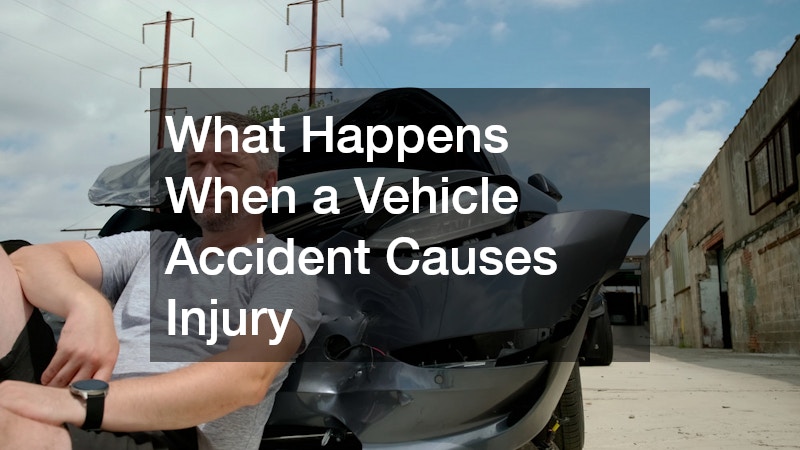
Vehicle accidents are one of the most common sources of unexpected injury claims, and the process typically involves more moving parts than a simple slip and fall. Police reports, driver statements, and vehicle damage assessments all play a role in figuring out who was at fault. Many people turn to car accident attorneys specifically because these cases often involve multiple insurance companies negotiating over liability at the same time. Getting professional guidance early can prevent you from accepting a settlement offer that doesn’t fully cover your medical costs or vehicle damage.
Getting Your Vehicle Back on the Road After a Crash
Once fault has been discussed and an insurance claim is underway, getting your car repaired becomes the next practical step in moving forward. Quality collision repair services restore not just the appearance of your vehicle but also its structural integrity and safety features. Choosing a repair shop that documents damage thoroughly can also support your injury claim if there’s any dispute about how severe the impact actually was. It’s worth asking shops whether they use manufacturer-approved parts and procedures, since this can affect both safety and resale value later.
- Ask for a detailed written estimate before collision repairs begin
- Confirm whether the shop offers a warranty on parts and labor
- Request photos of hidden or structural damage discovered during repair
- Keep all repair invoices in case they’re needed for your injury claim
Working with Insurance Companies After an Injury
Dealing with an insurance agency after an unexpected injury can be one of the more frustrating parts of the entire process, since adjusters are trained to minimize payouts. It helps to remember that the person you’re speaking with represents the company’s interests, not necessarily yours, even if they sound friendly and helpful. Before accepting any settlement, it’s wise to fully understand the extent of your injuries, since some symptoms take weeks to appear. Reviewing your policy details and any correspondence carefully can prevent surprises down the road when bills start arriving.
It also helps to keep a simple log of every phone call, email, and letter exchanged with the insurance representative handling your case. This record can become valuable if there’s ever a disagreement about what was promised or discussed. Staying organized from the start makes the entire negotiation process smoother and less stressful.
Why Professional Legal Support Matters

Some negligence cases are straightforward, but others involve disputed fault, serious injuries, or insurance companies that refuse to negotiate fairly. In these situations, working with the best personal injury attorney you can find becomes far more than a convenience, it becomes a necessity for protecting your financial future. Experienced attorneys understand how to value a claim properly, accounting for lost wages, future medical needs, and pain and suffering that many people underestimate on their own. They also know how to counter common tactics insurance companies use to reduce settlement amounts.
- Attorneys can calculate long-term costs like future surgeries or therapy
- They understand state-specific negligence and liability laws
- They handle negotiations so you can focus on recovery
- They know how to build a case using evidence and expert testimony
Finding the Right Advocate for Your Case
Choosing who will represent you is a personal decision that depends on your specific situation, the complexity of your case, and how comfortable you feel communicating with them. Searching for local lawyers who specialize in negligence and injury claims often produces better results than choosing a general practice attorney unfamiliar with these cases. Reading reviews, asking about past case outcomes, and scheduling a free consultation can help you gauge whether someone is the right fit before committing. Taking the time to compare a few options upfront can save significant stress and money later in the process.
- Look for attorneys with specific experience in negligence or injury cases
- Ask about their track record with cases similar to yours
- Confirm whether consultations are free and what the fee structure looks like
- Pay attention to how clearly they explain your options and next steps
Unexpected injuries can turn your daily routine upside down, but understanding how fault and negligence work gives you a clearer path forward. From gathering evidence right after the incident to knowing when professional legal guidance is worth pursuing, each step plays a role in protecting your health and your finances. If you’re currently dealing with an injury and unsure where to start, take time to document everything and consult with a qualified professional who can walk you through your options. Being informed today can make a significant difference in how smoothly your recovery and claim process unfold tomorrow.